The Inner Terrestrials
The four innermost planets—Mercury, Venus, Earth, and Mars—are dense, rocky worlds shaped by impact cratering, volcanism, and tectonic activity. While Earth developed a stable biosphere, its neighbors represent divergent evolutionary paths.
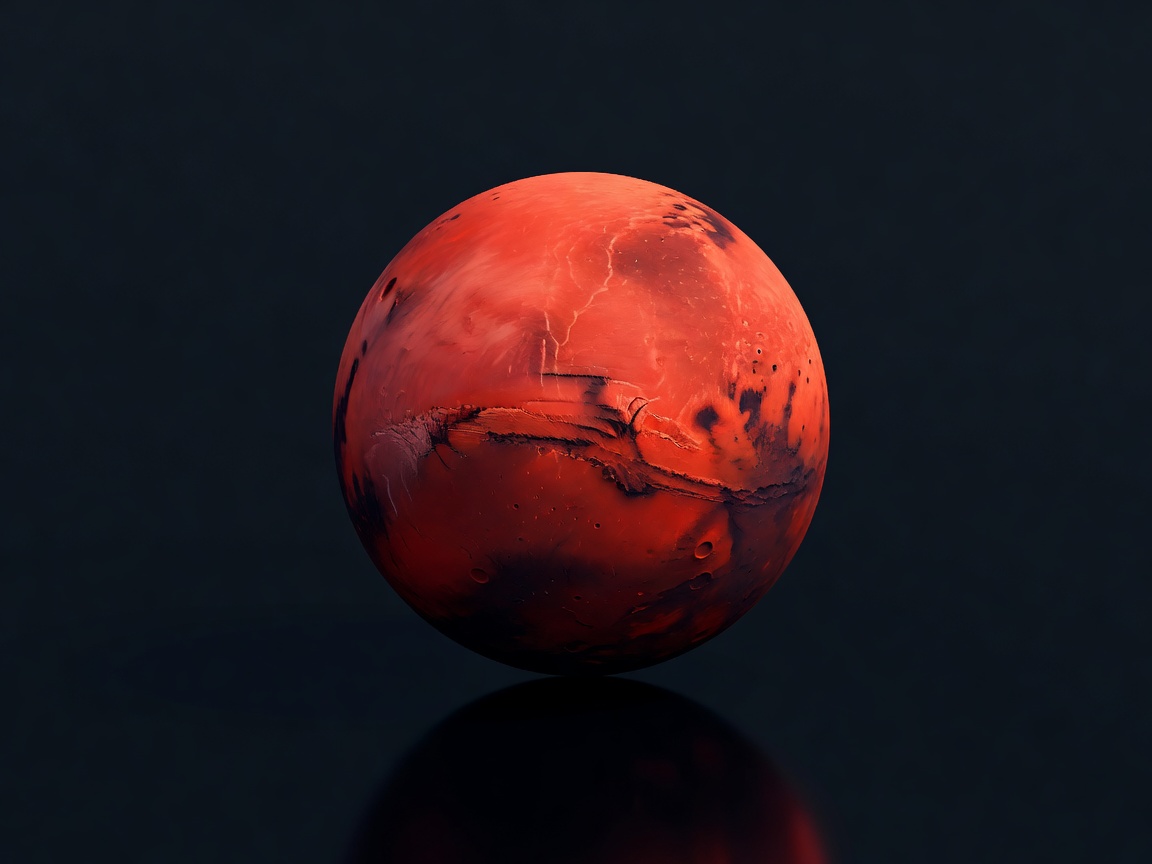
Venus suffers under a runaway greenhouse effect, its surface pressure 92 times that of Earth, shrouded in clouds of sulfuric acid. Mars, conversely, lost its magnetic field, allowing solar winds to strip away its atmosphere, leaving a frozen desert that may harbor subterranean ice reserves.
The Gas and Ice Giants
Beyond the frost line, volatile compounds like water, ammonia, and methane could condense into solid ice granules. This allowed planetary cores to grow massive enough to capture primordial hydrogen and helium.
The rings of Saturn are not solid bands, but billions of independent particles—ranging from dust grains to mountain-sized chunks of ice—locked in orbital dance.
Jupiter and Saturn dominate this region, acting as gravitational shields for the inner solar system. Further out, Uranus and Neptune, the ice giants, possess mantles of dense fluid over rocky cores. Uranus rotates on its side, a likely scar from a colossal primordial impact.
The Kuiper Belt and Oort Cloud
The solar system does not end at Neptune. The Kuiper Belt is a torus of icy bodies containing dwarf planets like Pluto, Haumea, and Makemake. Extending even further is the theoretical Oort Cloud, a spherical shell of cometary nuclei stretching halfway to the nearest star, Alpha Centauri.