The Next Missions

Humanity is pivoting from temporary excursions to sustained, permanent presence in the void.

Lunar Architecture

The Apollo missions proved we could reach the Moon. The next generation of missions aims to establish a permanent foothold. This requires massive infrastructure: orbital staging habitats, surface nuclear fission power systems, and in-situ resource utilization (ISRU) machinery designed to extract water ice from shadowed craters at the lunar south pole.

We go to the Moon not as a destination, but as a proving ground. It is the harbor from which we will launch into the deep ocean of space.

Developing closed-loop life support systems on the Moon is a prerequisite for planetary settlement. Every drop of water, every molecule of oxygen must be recycled with rigorous efficiency.
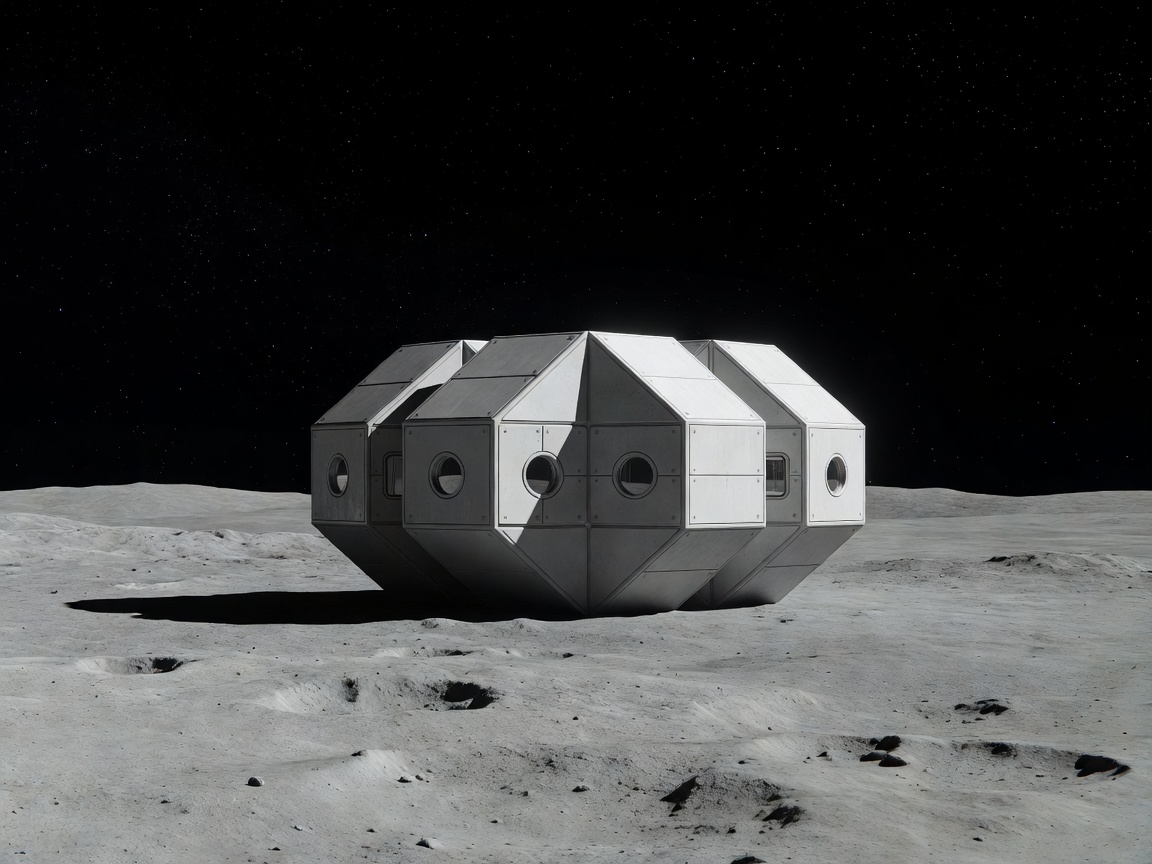
Stark 3D render of a geometric lunar habitat module on plain surface

Martian Logistics

A mission to Mars is governed by orbital mechanics; optimal launch windows occur only once every 26 months. A crewed vessel requires shielding from cosmic radiation and solar particle events during the six-to-nine-month transit.

Upon arrival, entry, descent, and landing (EDL) in the thin Martian atmosphere represents one of the most complex engineering challenges ever attempted. Surface operations will rely on robotic precursors to establish habitats and synthesize methane fuel from the CO2 atmosphere for the return journey.